| Home Flowers Vegetables Herbs Bulbs Fruit Organic Trees 'n Shrubs How to Grow Plant Problems Houseplants |
| All About Your
Favorite Plants:
Flowers
|
2021 Periodical Cicadas
Cicada broods arrive almost every year. The 2021 Cicada emergence will have one brood emerging, but it is a huge one!
There are many types of Cicada, each with a different life cycle. The life cycle is in years. Most common are the 17 Year Cicada, also called the "17 Year Locust", and the 13 Year Cicada. Upon reaching maturity, adult Cicadas emerge from holes in the ground where they have lived for the past 17 years. That's when the noise and the ruckus begins. The cicada sound, from millions of bugs, can be very un-nerving. Fortunately, their adult life span above ground is short, lasting about two to six weeks. The 2021 Cicada emergence will see one brood emerging.
2021 Cicada Watch Sightings - We are reporting the 2021 sightings, as reported...by you. Follow the 2021 brood, as it emerges.
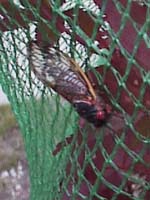
Cicada Control: The cicada bug is big, and not effectively controlled by harmful insecticides. Cicada prevention, or control, is best accomplished with 1/4" Pest Netting. The Life Cycle The adult Cicada is a flying insect. Different "broods" emerge in periodic cycles. The life cycle of a particular brood lasts from 2 to 17 years. The life cycle begins when Cicada eggs hatch, and the tiny cicada nymphs burrow into the ground. Once underground, the nymphs suck juices from the roots of plants. They stay underground for two to seventeen years, until they reach maturity. Mature nymphs dig tunnels to the surface and emerge when the soil temperature reaches 64-68 degrees. That's why southern areas see them emerge first. When the brood emerges, they do so in the millions, perhaps trillions. The nymphs shed their skins(molt). An adult, flying cicada emerges. The adult Cicada does not eat. It lives to mate and produce offspring. The males emit a mating call or "song" to attract the ladies. You can hear their song all day long. Some affected areas can have so many insects, that the noise becomes irritating and gets on your nerves. After mating, the female flies to twigs of deciduous trees. She cuts slits in a twig, and lays her eggs in the slit. Egg laying females cause significant damage to trees during their brief, adult stage. Shortly after mating, the adult Cicada dies. Damage to trees can be severe. Often, small and even medium sized trees are destroyed. Large full grown trees usually survive. But, they may be unsightly for a year or so. The female chooses deciduous trees. She cuts slits in small twigs, and lays her eggs. Were infestation are heavy, this the egg laying process is repeated on a tremendous number of twigs. This causes the twigs(or ends of the tree) to die, and break off. With the massive number of insects, this process is repeated countless times on the ends of the tree. The eggs hatch, producing tiny nymphs that fall to the ground, and a new life cycle has begun. Cicadas are not harmful to humans. They don't bite. Occasionally, one will land on a human. Did you know? Some people actually eat the adult Cicada!
Protection: Insecticides are generally ineffective. Some animals and insects are natural predators. But, during the infestation, there are just too many of them to make much of a difference. Insect Nettings are the best way to protect your young trees. Cover your trees and shrubs with a 1/4" insect netting. Tie the netting around the base of the bottom trunk of the tree. Some people who have seen the 17 year brood before, said they wrapped aluminum foil around the trees to protect them from climbing up the trunk. This does not offer protection, as they will fly from tree of tree in search of a mate.
Brood Map Displays a chart of all of the broods and when they will hatch.
|
******* Shop For:
Cell Phones
|
Copyright © Premier Star Company |